






Offered by:
L' Antiquaire & The Connoisseur, Inc.
36 East 73rd Street
New York City, NY 10021 , United States
Call Seller
212.517.9176
Showrooms
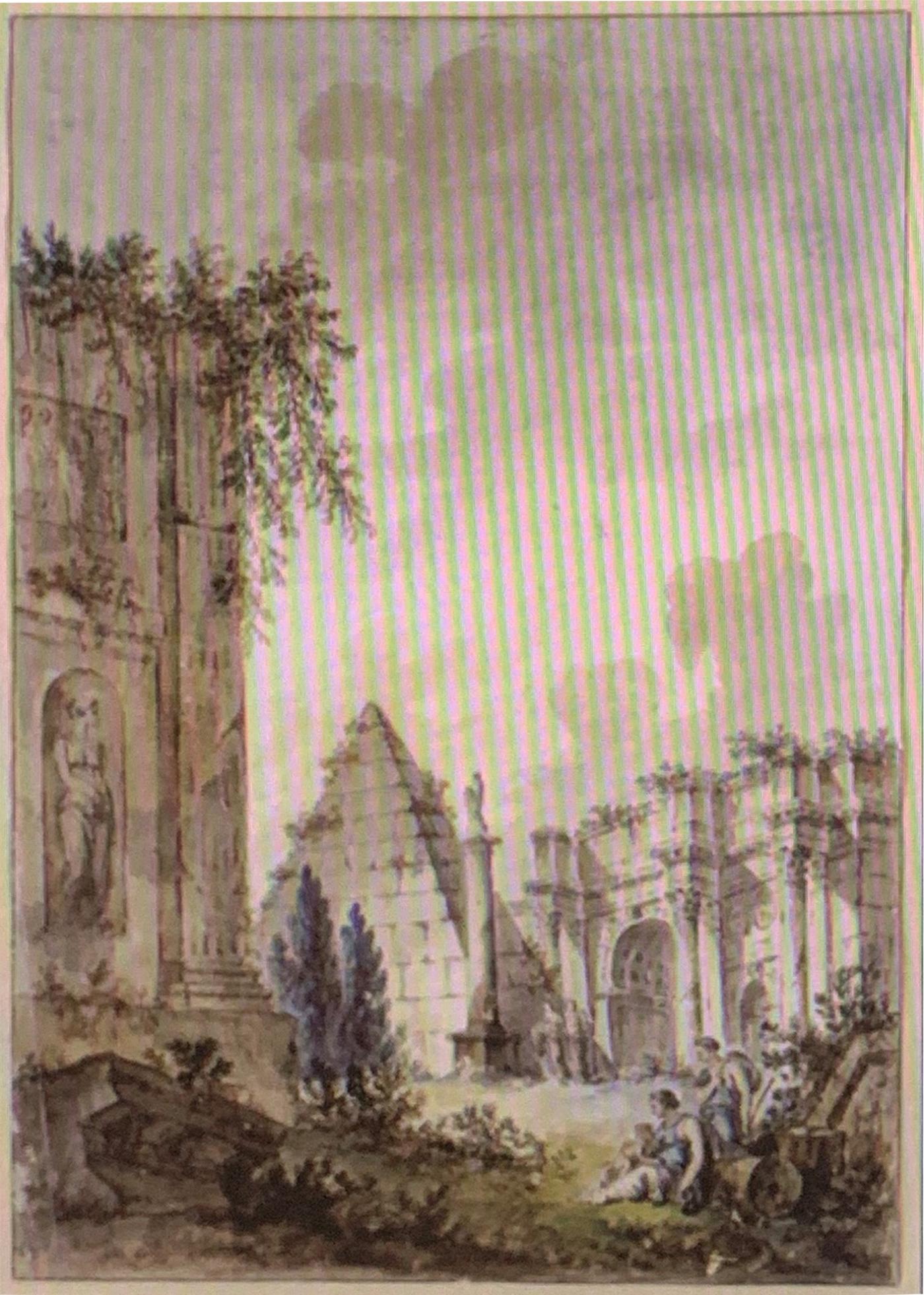
Capriccio with Roman Ruins
-
Description
Charles Louis Clerisseau won the Grand Prix for architecture in 1746. He had studied under J.F. Blondel at the Academie Royale d’Architecture. In 1749 Clerisseau was in Rome attending the French Academy, where he remained for over five years. Although he left the Academy in 1754 (after arguing with Charles-Joseph Natoire about his refusal to take Easter communions, which may have been due to his Jansenist sympathies), Clerisseau also studied under Germain Boffrand, he lingered in Rome until 1767, where he frequented the artists Mengs, Panini, Piranesi and the archeologist, Johann Joachim Winkelman, Cardinal Alessandro Albani and other members of the international society circle interested in the Antique.
On his way back to France the following year, he met the Scottish architect Robert Adam in Florence (who was himself traveling to Rome). Adam appreciated Clerisseau’s talent in drawing, describing his work as, “ruins in architecture to perfection -he had the utmost knowledge of architecture, of perspective and of design and coloring I ever saw or had any conception of. He raised my ideas. He created emulation and fire in my breast. I wished above all things to learn from him and have him with me in Rome.” Adam also said that Clérisseau had all the knowledge “so necessary to us architects.” and persuaded Clérisseau to travel with him to draw more ruins, and to act as his instructor on architectural theory and drawing. Adam paid all the expenses on their extensive travels through Italy, including Herculaneum and later to Spalato in Dalmatia, to document the ruins of Diocletian’s Palace.
Adam published The Ruins of the Palace of the Emperor Diocletian at Spalato, which became a great influence on the neoclassic style of architecture in England. Adam, however, sought to diminish Clerisseau’s work as the illustrator by only ascribing a few of the drawings to him. The Adams’ were very intent on enhancing their own reputations and didn’t relish sharing the fame. Adam paid Clerisseau a salary of 100 British pounds to remain in Italy until the Adams’ had well established their reputations in England.
Clérisseau also collaborated with Thomas Jefferson on the Virginia State capital (based on the Maison Caree in Nimes). Clérisseau’s fame was due to his drawings, watercolors and gouaches of ancient, Renaissance and Baroque Roman monuments.
Clerisseau finally returned to Paris in 1768 with enough architectural drawings and material to establish his own reputation and to see him elected to the Academie Royale as a painter of architecture. His work was important to the development of the neo-classical style of architecture, interior design and its dissemination.
The largest repository of Clerisseau’s work is in the Hermitage in Saint Petersburg. Catherine the Great had called him to her court, appointing him her architect and a member of the Academie of Saint Petersburg. The Empress had him design a maison antique at Tsarkoe Selo, which was, however, never built. She purchased over a thousand of Clerisseau’s drawings, gôuache and watercolors. Upon his return to Paris he became chevalier of the legion of honour.
This watercolor is typical of Clerisseau’s work – a capriccio of Roman ruins with a pyramid, a column and an ancient building with a niche and statue overgrown with greenery; people in ancient dress are in the background. He was universally considered one of the best draughtsmen of the eighteenth century. - More Information
-
Dimensions
W. 7.88 in; H. 11 in; W. 20.02 cm; H. 27.94 cm;
Message from Seller:
L' Antiquaire & The Connoisseur, Inc. specializes in European works of art, antiques, and paintings, with a rich history dating back to 1935. For more information, contact us at 212.517.9176 or info@lantiquaire.us.
Sold
More Listings from L' Antiquaire & The Connoisseur, Inc. View all 184 listings
-
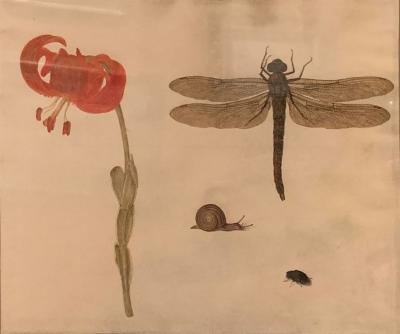
Still Life; Dragonfly and Primrose
-
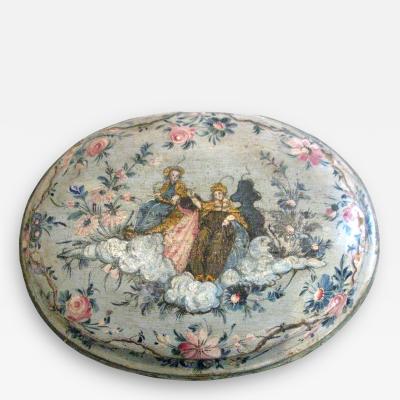
An Oval Floral-Decorated Blue Lacquer Box with Female Figures on the Center Top
-
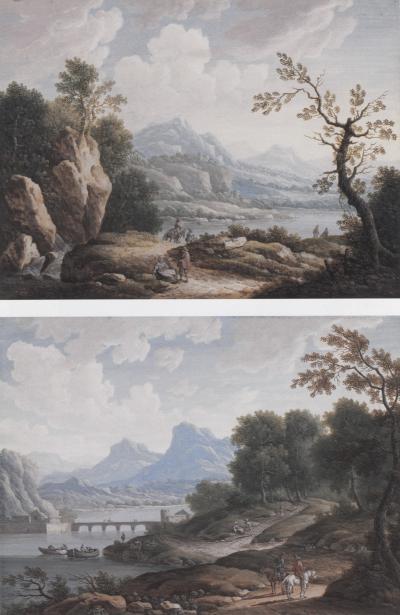
Mountain Landscapes
-
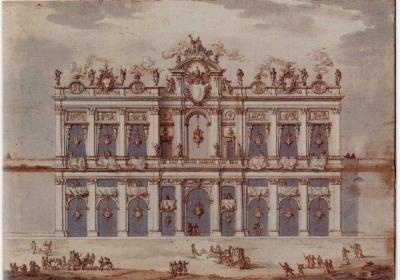
Signed Design for a Façade, possibly for the Festa della Chinea of 1766
-
An Orange Blossom with a Beetle, a Butterfly and a Fly

-
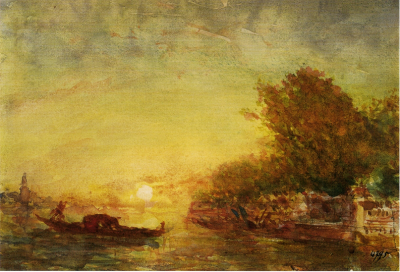
Entrance of gardens in Venice along the Laguna
-
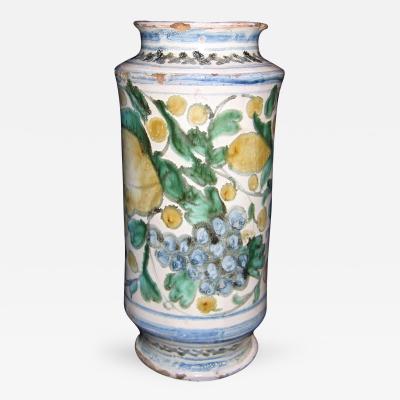
A Large Sicilian Albarello with Scrolling Fruited Vines with Lemons
-
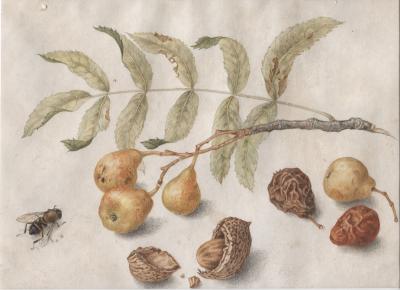
Still Life of Grapes, Nuts, Pears and a Bee in Louis XIII Frame
-
Architectural Fantasies with Figures
-
The Forum with the Column of Phocas in Rome

-
Classical Ruins with a Seascape in the Distance
-
A Ceramic Vase with Polychrome Decoration of a Woman Between Palm Trees
-
A Harbor Scene with Roman Ruins
-
A set of Five Vedute (scenes) of Venice

