







Offered by:
H. Gallery
Concordiastraat 68 - 127
Utrecht 3551EM , Netherlands
Call Seller
0031302270051
Showrooms
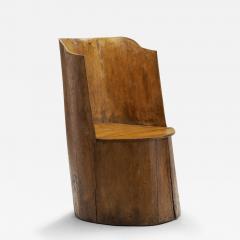
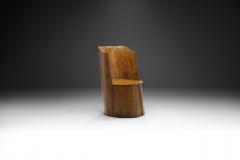
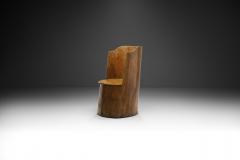
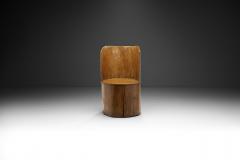
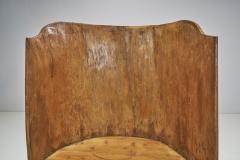
Traditional Norwegian Carved Kubbestol, Norway early 20th century
-
Description
In Norway, cube chairs have been in use since the Middle Ages, and in the 18th and 19th centuries, cube chairs were mostly used in the farming communities in Eastern and Southern Norway.
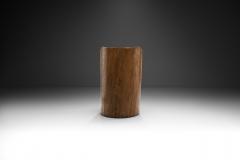
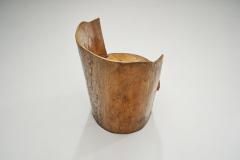
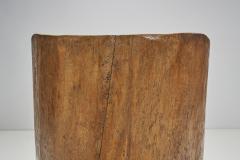
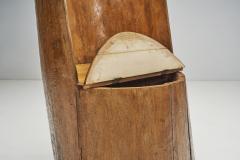
Kubbestol or cube chair is traditionally carved out of a single block of wood. To reduce tensions in the material and prevent cracking, the block is usually hollowed out in the middle before the material is dried. This chair showcases this with unique hatches and under seat storage. Like many other Norwegian furniture types, the cube chair also has roots far beyond the country's borders. The look is most likely influenced by South European chairs of the same shape, carved in stone or made in bronze or clay. Such chairs are known from around 900 to 700 years before the birth of Christ. However, in Norway this type of chair has only been made of wooden blocks. In the case of this chair, the tree trunk was hollowed out while the back continues upward from the seat in a curved shield shape that makes the chair both snug and comfortable. Most likely this chair was made traditionally, roughly hewn while the material was raw. While the log is seemingly roughly shaped, the seating comfort is surprisingly high, as functionality has been historically important for Scandinavian furniture makers. The kubbestol was often placed next to the open-hearth fireplace or next to the bed, and it was reserved for the head of the household. The elemental organicity is evident through the cracks and decades old patina, creating a look that is just as coveted nowadays as Axel Einar Hjorth’s minimalistic pieces.
These days the kubbestol has become a symbol of Scandinavian roots for many families with ties to Norway, Sweden, or Denmark. A reminder of rural heritage and a time when most things in and around the home were made by hand from materials found in nature.
Condition:
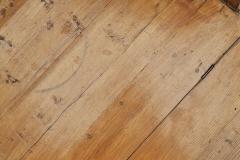
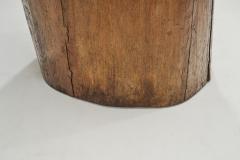
In good vintage condition. Wear consistent with age and use. The chair has some cracks and marks.
Dimensions:
23.03 in W x 26.37 in D x 37.79 in H; Seat height 18.3
58.5 cm W x 67 cm D x 96 cm H; Seat height 46.5 cm
About the Design:
The earliest records of the kubbestol/kubbstol in Scandinavia are in the form of small silver amulets: one from a burial site on the island of Björkö to the west of Stockholm, which dates to the 9th century, and two found amongst a collection of money and jewellery unearthed at Fölhagen on the Swedish island of Gotland and dated to the 10th century.
Whereby it is important to remember that a representation of a kubbstol created in 9th and/or 10th century Sweden shouldn’t be confused with the physical existence of the kubbstol in 9th and/or 10th century Sweden. That while it strongly implies, they almost certainly were physically in existence in Sweden; they alone confirm that kubbstolar were known in Sweden, and presumably had an importance and significance. Why else use them as amulets, and as amulets crafted from precious, valuable, materials? In 1916 Bernhard Salin noted that “due to lack of time and space, I have to refrain from considering the interesting question of why the kubbstol during the Viking Age was made in the form of a pendant.”
Exactly what that significance is and was, other than, potentially, a simple symbol of the power of Odin and/or Frigg, we know not. As with all items of vernacular furniture the search for origins invariably leads one to supposition and fantasy, rather than your actual facts. However, the kubbstol became a symbol of Scandinavian history and culture, with a unique appearance and craftsmanship that contains history just like a book. ~H.
Shipping:
This chair will be packaged and shipped with the greatest care and attention to make sure you will receive the item in gallery condition. Complimentary shipping within the Netherlands.
IMPORTANT!
VAT normally applies and will be added to items when purchased by a European buyer or transported to a location within the EU. -
More Information
Origin: Norway Period: 1900-1919 Materials: Wood Condition: Good. In good vintage condition. Wear consistent with age and use. The chair has some cracks and marks. Creation Date: early 20th century Styles / Movements: Modern, Scandinavian Modern Dealer Reference #: 20221325 Incollect Reference #: 665672 -
Dimensions
W. 23.03 in; H. 37.8 in; D. 26.38 in; W. 58.5 cm; H. 96 cm; D. 67 cm; Seat H. 18.31 in; Seat H. 46.5 cm;
Message from Seller:
Located in Utrecht, The Netherlands, H. Gallery specializes in modern and contemporary design with a strong focus on Brazil and Scandinavia. The gallery strives to preserve and promote especially Brazil's rich design heritage and curates a select group of contemporary artists. Meticulous research, ie getting in contact with the original designers, producers, their heirs, and retrieving and indexing old catalogues and magazines is at the heart of its activities. All works presented excel in great
Sold
More Listings from H. Gallery View all 1425 listings
-
Model "E 1240" Table Lamp by Hans Bergström for ASEA, Sweden 1940s
-
Pair of Model "E1251" Table Lamps by Cebe, Sweden ca 1950s

-
Art Nouveau Table Lamp by Nils Emil Lundström, Sweden Early 20th Century
-
Pair of Peter Celsing Wall Lamps for Falkenbergs Belysning, Sweden 1966
-
Set of Four Belgian Brutalist Chairs in Heavy Oak, Belgium 1970s
-
Model “2610” Just Andersen Table Lamp, Denmark Second half of 20th century
-
Pierre Chapo "T22" Elm Coffee Table, France 1970s
-
Chaise Longue in the manner of Arne Vodder, Europe Mid-20th Century

-
Brass and Black Lacquered Metal Floor Lamp, Denmark 1950s
-
Rocking Chair with Sheepskin Upholstery, Europe First half of the 20th Century
-
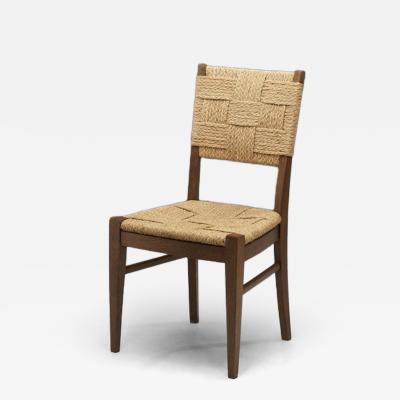
Oak and Woven Rope Chair by Audoux-Minet, France Mid-20th Century
-
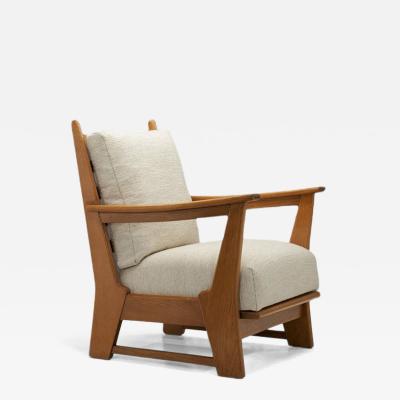
Haagse School Armchair by Bas van Pelt, Netherlands 1930s
-
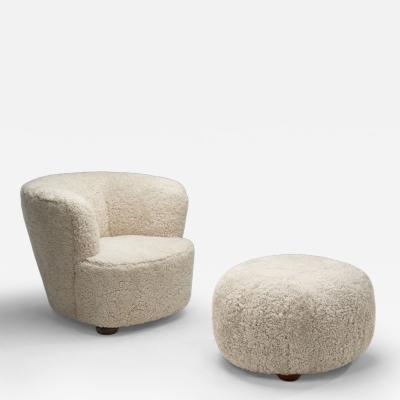
Danish Cabinetmaker Sheepskin Lounge Chair and Ottoman, Denmark 1940s
-
"Monte Carlo" Sofa by Ingvar Stockum for Futura Möbler, Sweden 1960s